Olubfdh
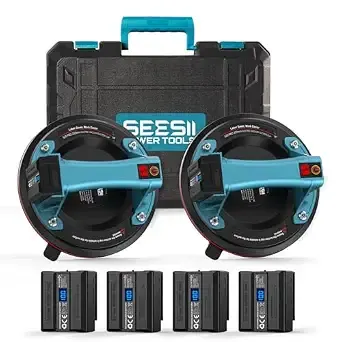
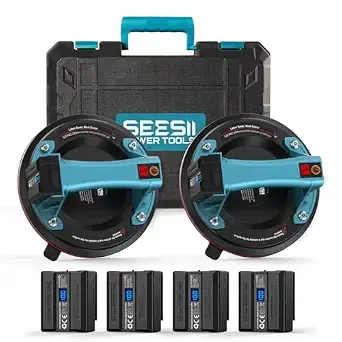
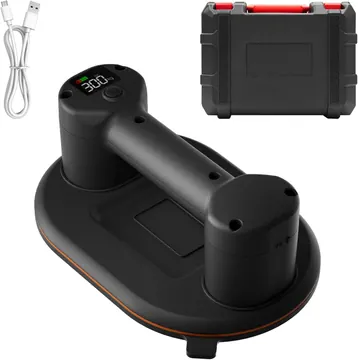
Olubfdh battery vacuum lifter, twin pack, 300 kg, 4,000 mAh
300 kgOvalBuilt-in battery
€46€23 each
The seal decides which surfaces a vacuum lifter holds safely on. Based on 445 versus 63 models.
445 models · median €64 · 240 kg
63 models · median €84 · 140 kg
| Rubber seal | Foam seal | |
|---|---|---|
| Number of models | 445 | 63 |
| Price (median) | €64 | €84 |
| Price range | €12 to €500 | €23 to €407 |
| Capacity (median) | 240 kg | 140 kg |
| Highest load capacity | 500 kg | 500 kg |
| Capacity per €100 (median) | 347 kg | 174 kg |
| Share with USB-C | 13% | 19% |
| Share with removable battery | 40% | 43% |
| Share with digital display | 67% | 56% |
| Share with vibration | 3% | 6% |
| Share with automatic re-pump | 29% | 22% |
| Share with foam seal | 0% | 100% |
| Share with rubber seal | 100% | 0% |
| Share of branded models | 32% | 29% |
The seal is the component that decides whether any vacuum lifter, often called a gripster in the trade, holds or lets go. It closes off the space under the suction plate, and only when it sits tight can the pump build up a stable vacuum. In the database, 445 vacuum lifters have a rubber seal and 63 a foam seal. The two materials suit very different surfaces, and that shows in price and load capacity too.
Prices for gripsters with a rubber seal range from €12 to €500, with an average of €83. Foam models cost between €23 and €407, with an average of €126. At 86% of all units, rubber is the standard, so the selection and price competition are correspondingly large.
The lower load capacity of foam models, 140 kg versus 240 kg at the median, has technical reasons. A rubber lip is thin and flexible. Under vacuum, it lies flat and is pressed firmly from outside, so hardly any air seeps in on smooth surfaces. A foam ring, by contrast, is soft and wide. It gives when pressed on and fills recesses, but its structure always lets some air through. The wider ring also takes up part of the plate area, which is then missing from the holding force. Both lead to lower rated loads.
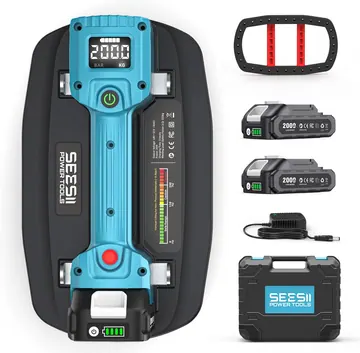
Design plays a part too. Foam is found exclusively on oval and narrow plates, and narrow plates inherently have less effective area. Even so, there are outliers at the top: the strongest foam model, an electric 10-inch vacuum lifter with a digital display, is rated at 500 kg and costs €46. It is also the unit with the most load capacity per euro in this group.
A notable point about the features: automatic re-pump is less common on foam models (22% versus 29% of electric units), even though it would be especially useful here. 56% of foam models and 67% of rubber models have a digital display, and 16% and 8% respectively an LED indicator. The median battery is smaller on foam models (2,000 versus 3,000 mAh). 19% of electric foam models and 13% of rubber models charge via USB-C. Twin packs are only available with a rubber seal (12%).
On smooth surfaces, the rubber seal is unbeatable. Glass, glazed tiles, polished porcelain stoneware, polished natural stone, metal and coated panels give the sealing lip a closed surface, the vacuum stays stable for a long time and the pump rarely has to top up. That saves battery power and increases safety while carrying.
Rubber seals are rugged and easy to clean. A damp cloth removes dust and adhesive residue without dirt getting lodged in the material. The selection is large: from a manual hand pump twin pack for €12 per unit rated at 220 kg to a 3-in-1 unit with vibration rated at 500 kg for €249. Among manual gripsters, too, rubber is the standard almost without exception, at 97%.
Foam holds where rubber fails. On tiles with a wood grain, on slip-resistant surfaces rated R11 or R12, on split-face natural stone, on grooved profiles and on rough concrete slabs, a rubber lip only rests on the high points. Air seeps in through the low points and the vacuum collapses. The soft foam presses into the recesses and seals them off.
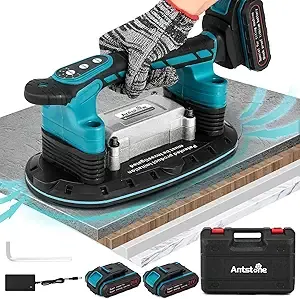
Load capacity is lower, but still far more than enough for most tiles: a 20 x 120 cm porcelain stoneware plank 10 mm thick weighs just under 6 kg. The cheapest foam model, an electric vacuum lifter with a foam pad, costs €23 with a 100 kg rated load.
Foam is a wear part. It wears down on rough surfaces and picks up dirt. On many models the pad can be replaced, and if you work regularly on rough surfaces, a spare ring belongs in your basic kit.
| Application | Recommendation | Reason |
|---|---|---|
| Glazed wall tiles | Rubber | smooth surface, highest holding force |
| Large-format porcelain stoneware, matte or polished | Rubber | smooth enough, heavy load |
| Wood-look tiles with deep grain | Foam | rubber lip draws air through the texture |
| Glass | Rubber | closed surface, clean seal |
| Worktops, polished | Rubber | heavy load, smooth surface |
| Worktops, brushed or textured | Foam | rubber lip does not make full contact |
| Rough concrete patio slabs | Foam | seals on rough surfaces |
| Stair treads with grooved profile | Foam | seals off the grooves |
If in doubt, a test run helps: place the gripster, build up the vacuum and watch the indicator for a minute. If the value stays stable, the seal holds on this surface. If it drops, the surface is too rough for rubber or the seal is dirty. The Surface guide describes how different surfaces behave, and the guide Caring for and replacing seals explains care and replacement.
The rubber seal is the standard for smooth surfaces and offers more load capacity for less money. The foam seal is the tool for textured and rough surfaces: more expensive and with a lower rated load, but reliable where rubber draws air. If you mostly move glazed tiles, glass and polished panels, you do not need foam. If you regularly lay textured wood-look tiles, slip-resistant tiles or patio slabs, you should have a vacuum lifter with a foam seal in your case, ideally with automatic re-pump. You can find all models under With foam seal and With rubber seal.
That depends on how deep the texture is. On smooth or only slightly textured wood-look tiles, rubber usually holds reliably. With deep grain, air seeps in under the lip and the vacuum drops. A test run while watching the indicator quickly gives you certainty.
Foam gives way and seals less tightly than a rubber lip, and the wider ring also takes up part of the effective area. Foam models have a median rating of 140 kg, rubber models 240 kg. That is still more than enough for the weight of typical tiles, with a large margin.
It is highly recommended, because some air always seeps in through foam. The automatic function detects the pressure loss and re-pumps on its own. In the database, only 22% of foam models have this function, so look for it specifically when you buy. The category With automatic re-pump gives an overview.
Only if the manufacturer offers matching pads for the model. A rubber lip and a foam ring differ in shape and mounting, so converting without an original part makes no sense. If you work on both kinds of surface, you are better off with two units.